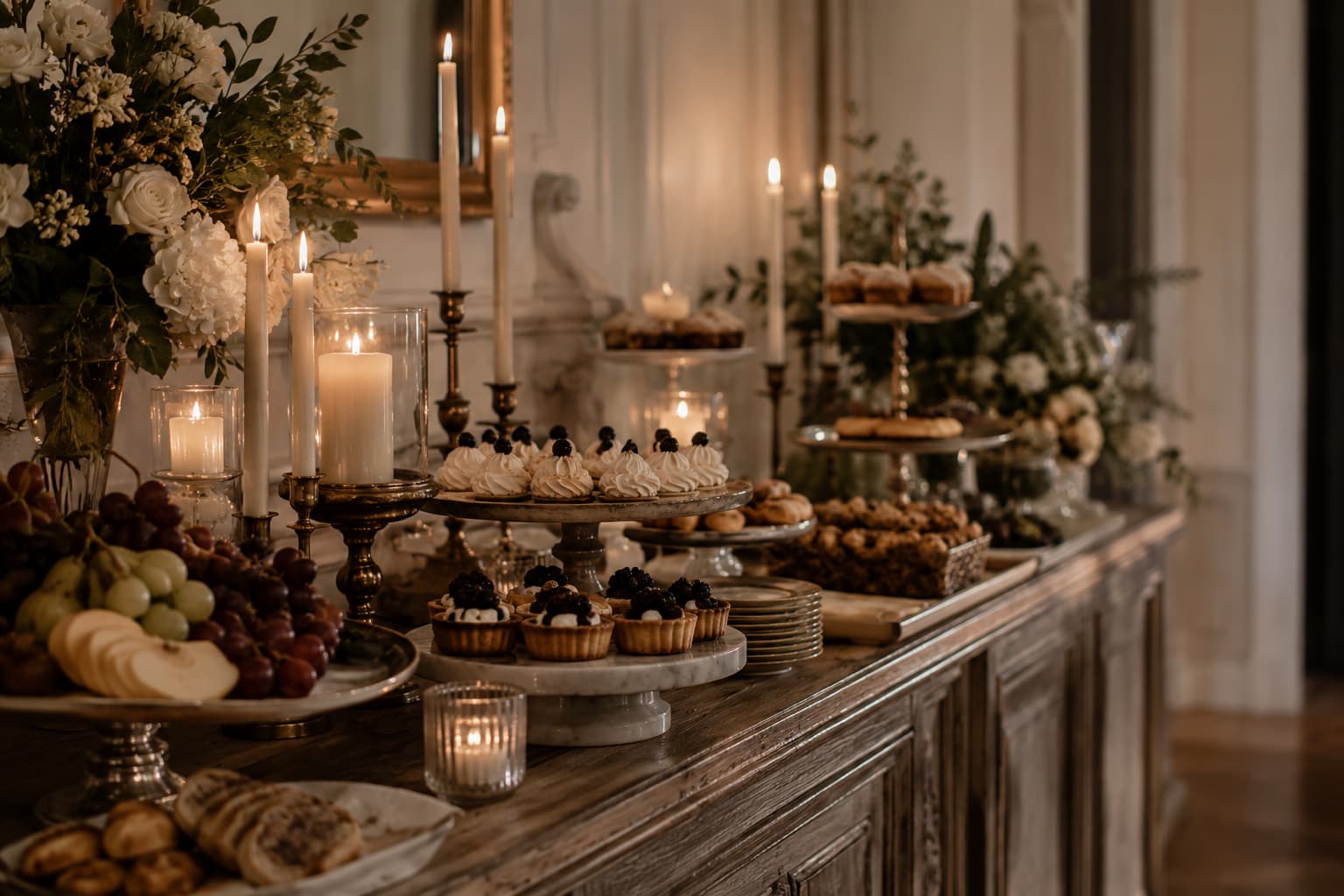
Decorative Food Displays help a celebration feel abundant, organized, and visually memorable. They turn food into part of the event design instead of treating it as something separate from decor. A display can be small and elegant, like a dessert tray with candles and flowers. It can also be generous and dramatic, like a grazing table with boards, bowls, breads, fruits, and seasonal accents. The key is balance. Food should look beautiful while staying easy to serve. Guests should understand the setup quickly. When a display feels clear and inviting, it becomes one of the most enjoyable parts of the gathering.
Decorative Food Displays elevate events because they create an immediate sense of occasion. Guests see the table and understand that the gathering has been planned with care. A strong beautiful buffet setup can make even simple food feel generous. It also helps organize movement, serving, and conversation. Instead of placing dishes randomly across a counter, you create a visual path. Edible Decor Toolkit for Your Gatherings – 3-in-1 Bundle of Guides, eBooks & Checklists helps make that kind of event-ready styling easier to repeat.
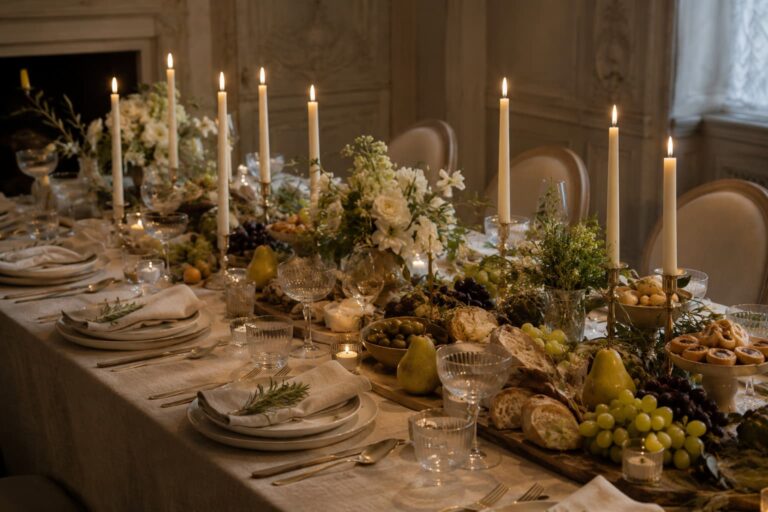
Decorative Food Displays should begin with layout, not garnish. Decide where plates, utensils, main items, sauces, drinks, and napkins will go before adding decorative details. This prevents the table from becoming crowded. A useful hosting food display places plates near the starting point and keeps serving tools near each dish. Guests should not have to search for what they need. A clear layout also helps the display look polished. When the function is organized, the beauty becomes easier to build.
Think about guest flow. If people approach from one side, arrange the display in a logical order. If the table can be reached from both sides, repeat important items. Place taller pieces toward the back or center depending on access. Keep fragile decor away from crowded serving zones. These practical choices make the display feel smooth. They also reduce stress for the host. A beautiful food table should support the event, not create more work during it.
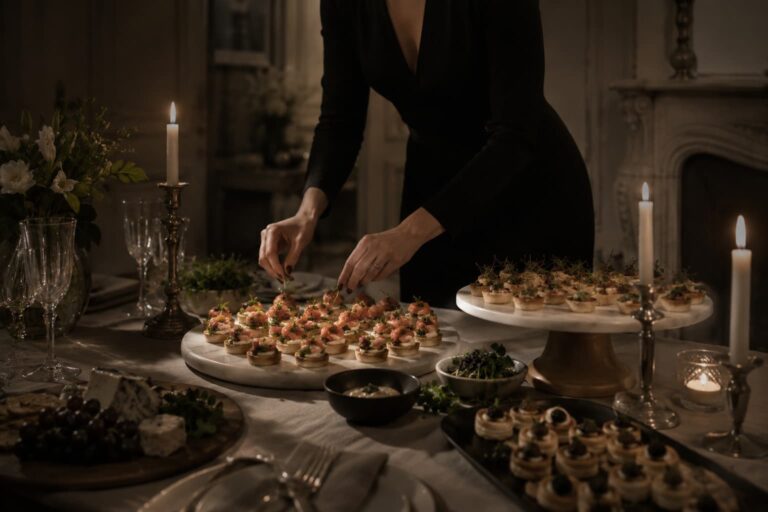
Levels make food displays more dynamic. Use cake stands, overturned bowls under linens, raised trays, wooden boards, and low pedestals to create height. Zones help guests understand what they are seeing. One zone might hold savory bites. Another can hold sweets. Another can hold dips, breads, or fruit. A strong grazing table decor plan uses levels and zones together. This keeps the display from feeling like a flat collection of dishes. It also helps each food item look intentional.
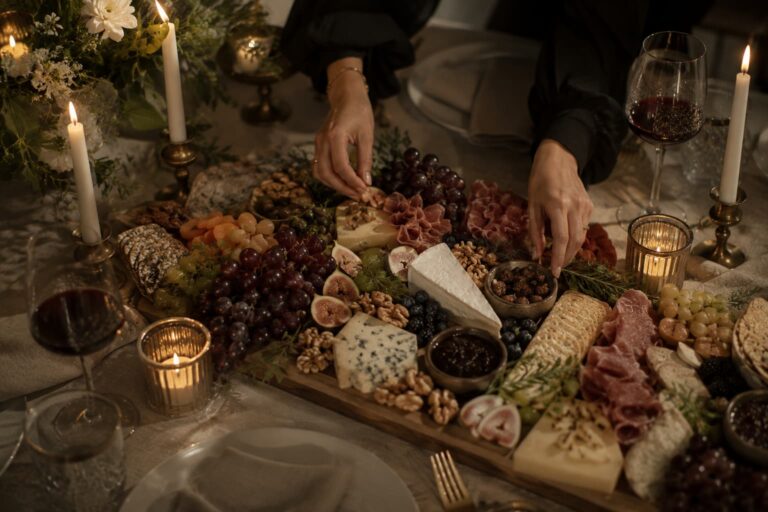
Decorative Food Displays look best when the decor feels connected to the food. Herbs, citrus, grapes, figs, edible flowers, bread, nuts, and seasonal produce can all create decorative value. A thoughtful edible party decorations approach keeps the table useful while making it more beautiful. Use rosemary near roasted dishes, citrus beside seafood or desserts, grapes near cheese, and herbs beside dips. These details should look natural, not random. When the garnish belongs to the food, the display feels more elevated and easier to enjoy.
Serving pieces can change the entire feeling of a food display. White ceramic looks clean and classic. Dark platters add drama. Wood feels warm and relaxed. Brass or gold accents bring celebration. Glass feels light and elegant. A polished appetizer table styling setup uses serving pieces as part of the decor. Keep the palette controlled so the food remains the focus. Too many different materials can distract from the display. Choose a few finishes and repeat them. Repetition creates luxury, even when the food is simple.
Decorative Food Displays can shift depending on the type of gathering. A birthday dessert table may feel playful with colorful sweets and candles. A dinner party appetizer display may feel refined with cheese, bread, fruit, and flowers. A holiday buffet may use richer tones, layered dishes, and warm lighting. A casual brunch can use pastries, fruit, spreads, and soft linens. A flexible party platter ideas mindset helps you adapt the same principles to different events. You change the food and palette, but keep the structure.
The real test of a food display happens after guests begin eating. Keep backup crackers, bread, fruit, or small bites ready for refreshing. Use bowls for items that scatter easily. Place serving utensils clearly. Leave enough empty space so the table can change naturally. Strong celebration food styling should survive real use. For table-specific inspiration, read the edible table decor article. For party styling fundamentals, explore the food styling tips article. For board-focused ideas, visit the creative grazing board article. Edible Decor Toolkit for Your Gatherings – 3-in-1 Bundle of Guides, eBooks & Checklists helps you create displays that stay beautiful, practical, and celebration-ready.

Leave a comment